What's included
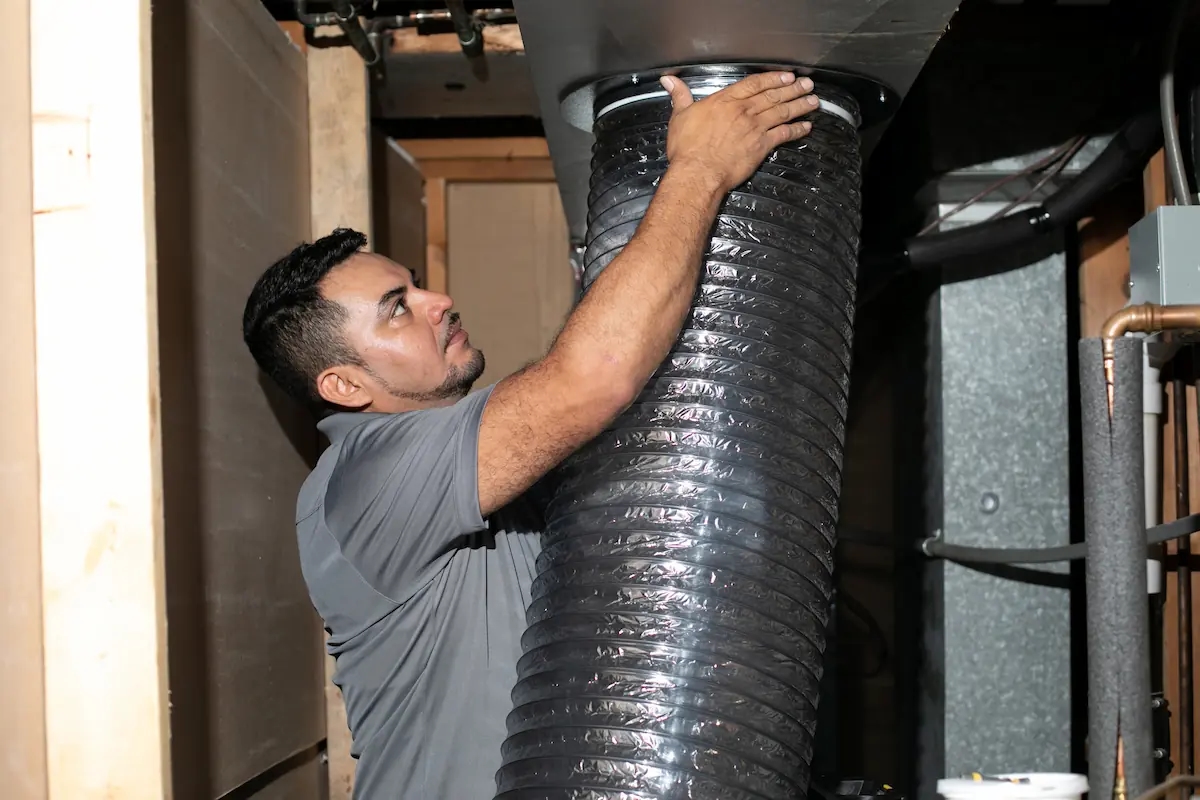
Our air duct mold remediation service is a complete, contamination-focused cleaning of your entire duct system, including:
- Full inspection and mold assessment of the duct system
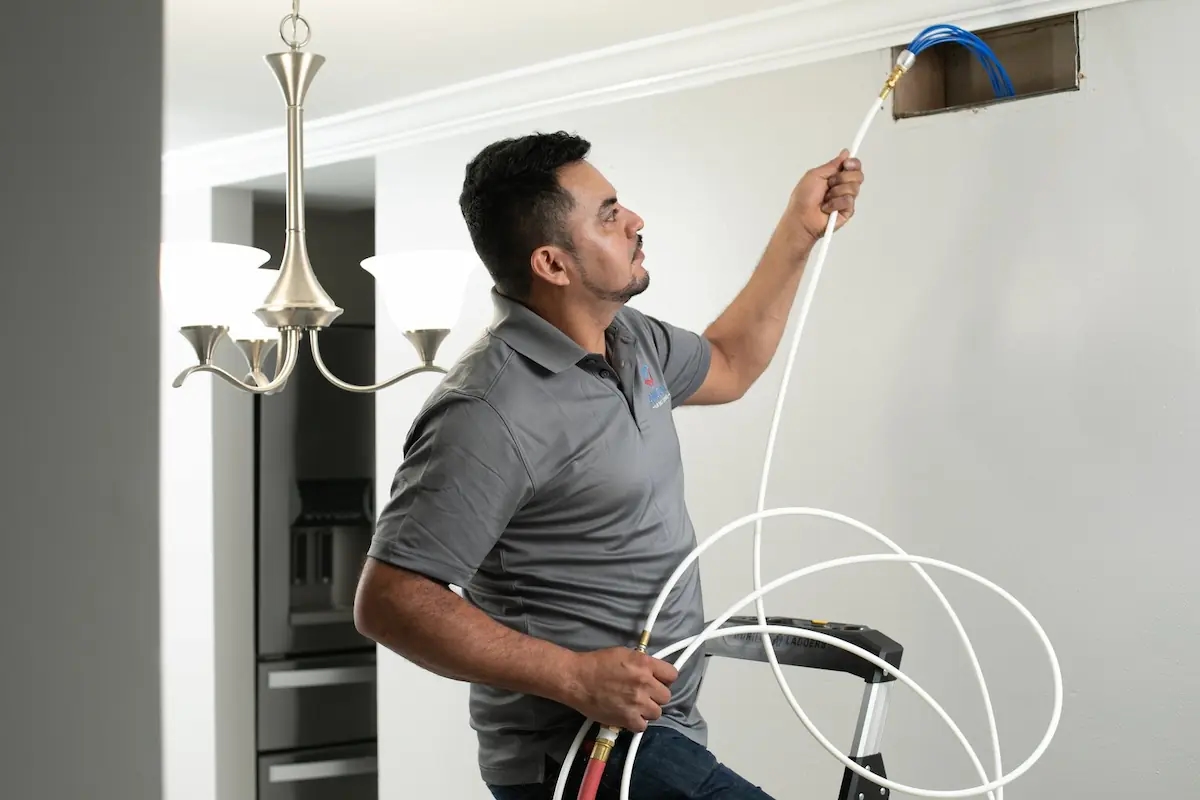
- Agitation and HEPA-filtered vacuum extraction of the entire duct network
- EPA-registered antimicrobial treatment applied to all interior duct surfaces
- Treatment of supply vents, return vents, and main duct lines
- Deodorizing treatment for musty odors where appropriate
- Proof of remediation with before/after photos
- Moisture-control recommendations so mold is less likely to return
Why mold in ducts needs careful handling
Mold grows where moisture meets organic dust. EPA guidance on mold and health notes that molds can produce allergens and irritants; sensitive people may have hay fever–type symptoms, and mold can trigger asthma attacks in people who are allergic to mold. CDC similarly describes possible coughing, wheezing, and irritation — reactions vary by person.
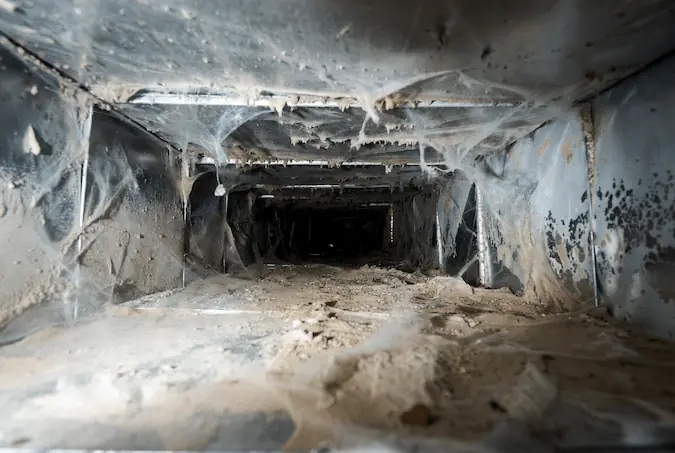
For HVAC systems, EPA’s duct-cleaning guidance says you should consider cleaning when there is substantial visible mold on hard-surface ducts or other components — and that moisture must be fixed or growth can return. We use containment, HEPA extraction, and mechanical cleaning of metal duct surfaces; an EPA-registered antimicrobial may be applied where appropriate. We do not diagnose or treat medical conditions.
Signs to have the system inspected
- Musty, damp, or “basement” smell when the HVAC system turns on
- Visible dark or discolored spots around vent covers or accessible duct surfaces
- Recent water leak, flooding, or persistently high indoor humidity
- Condensation on or near ductwork or vents
- You want a technician to show you what they find before recommending treatment
What this service is designed to do
- Document visible contamination and moisture clues during inspection
- Mechanically clean hard-surface duct interiors under HEPA negative pressure
- Apply an EPA-registered antimicrobial where the product label and surface allow
- Reduce musty odor associated with the cleaned surfaces (results vary)
- Provide before/after photos and next-step moisture recommendations
- Align with EPA’s emphasis: clean when substantial mold is present, then fix moisture
Our Air Duct Mold Remediation Process
Every job follows a careful, step-by-step process built for contamination work — not a casual dust wipe.
Step 1
Inspection & Assessment
Our technicians inspect accessible duct components, note visible growth or musty odor, and look for likely moisture sources. Ask them to show you what they find.
Step 2
Containment & Preparation
Work areas are protected. Where practical, we seal registers and use negative air pressure so disturbed debris is pulled into HEPA filtration rather than into living spaces.
Step 3
Negative Pressure Extraction
High-powered HEPA-filtered vacuums are connected to the duct system to capture loosened debris.
Step 4
Mechanical cleaning
Specialized tools agitate and dislodge contamination from hard interior duct surfaces so it can be extracted.
Step 5
Antimicrobial Treatment
When appropriate, an EPA-registered antimicrobial labeled for the intended use is applied to treated hard surfaces after mechanical cleaning.
Step 6
Final Inspection & Documentation
Technicians verify results, take before/after photos, and discuss moisture-control steps. Wet or moldy fiberglass lining typically needs replacement, not cleaning alone (EPA).
More Services
Interested? Contact us at support@amazonadc.com, or (800) 606-3334
Air Duct Cleaning & Sanitization
$299
Professional cleaning of one complete air duct system with complimentary sanitization upon request and before/after photo proof.
Learn more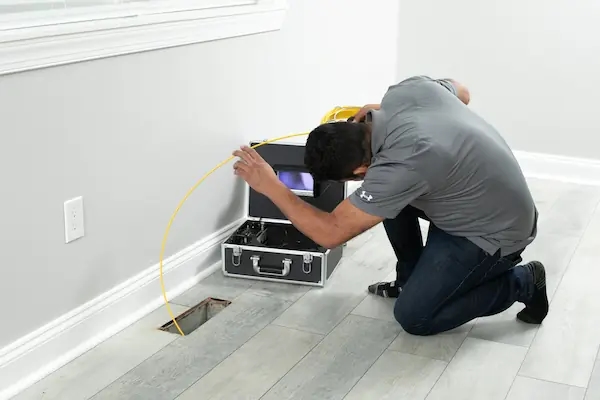
Dryer Vent Cleaning
$199
Professional dryer vent cleaning with rotary brush and high-powered vacuum to reduce fire risk and improve dryer efficiency.
Learn more
Air Duct Cleaning, Dryer Vent Cleaning & Sanitization
$399
Complete air duct system cleaning plus dryer vent cleaning and sanitization — our most popular package.
Learn moreFrequently Asked Questions
Questions about mold in air ducts? Call (800) 606-3334 to schedule an inspection. We do not provide medical advice.
How do I know if my air ducts actually have mold, or just dust?
Substantial mold is often accompanied by a musty odor and visible discoloration on accessible surfaces. EPA notes that only an expert (sometimes lab analysis) can confirm mold versus look-alikes. Our technicians can inspect accessible areas and show you what they see before recommending treatment.
Is duct mold a health hazard?
EPA and CDC describe mold as a potential source of allergens and irritants; sensitive people may react, and people with mold allergy or asthma can have stronger responses. We clean contaminated duct surfaces when inspection supports it — we do not claim to cure or prevent medical conditions. See EPA mold and health and CDC on mold.
What products do you use to treat mold in ducts?
After mechanical cleaning, we may apply an EPA-registered antimicrobial intended for the labeled use on hard HVAC surfaces. Product choice depends on surface type and situation; wet or moldy fiberglass often cannot be cleaned effectively and may need replacement.
Will mold come back after remediation?
EPA is clear: if the moisture problem is not fixed, mold can return. We remove and treat what we can reach and point out humidity or leak clues we find so you can address the source.
How is this different from regular duct cleaning?
Standard air duct cleaning focuses on dust and debris removal. This service is for contamination-focused jobs (visible mold / musty HVAC contamination), with containment, HEPA extraction, and optional antimicrobial treatment after cleaning.
Which areas do you serve?
We serve Virginia, Maryland, and Washington DC from offices in Burke and Bethesda. Call (800) 606-3334 to confirm availability.
Service Area
We serve homes and businesses across Virginia, Maryland, and Washington, DC — with local offices in Burke and Bethesda, including Alexandria, VA, Arlington, VA, Chantilly, VA, Clarksburg, MD, College Park, MD, Columbia, MD, Ellicott City, MD, Fair Oaks, VA, Fairfax, VA, Falls Church, VA, Frederick, MD, Gaithersburg, MD, and more cities we serve.
Virginia
Maryland
Our offices
Contact Us
Our specialists will contact you immediately. (800) 606-3334 · support@amazonadc.com