Blog
Retrofitted trunks, Georgia Avenue particles, and why older registers film over
Silver Spring blends pre-war brick housing with active transit construction and urban density. Learn how retrofitted ductwork and corridor dust create a unique indoor air challenge.

Central air added after the house was built changes everything
Much of Silver Spring's housing stock — the Woodside bungalows, the North Woodside colonials, the brick capes along Sligo Creek — was built in the 1920s through 1950s, decades before residential central air conditioning became standard. When HVAC was retrofitted into these homes, installers worked around existing framing, plaster walls, and narrow joist bays. The resulting duct paths include sharp bends, abrupt diameter changes, and joints where sheet metal meets old timber.
These imperfect connections create two problems. First, the turbulence at each bend slows airflow and deposits particles on the duct wall the way sediment collects on the inside of a river bend. Second, the unsealed joints allow unconditioned basement air — carrying its own load of moisture, dust, and occasional insect debris — to enter the supply stream and mix with the filtered air the system is supposed to deliver.
Urban dust is not suburban dust
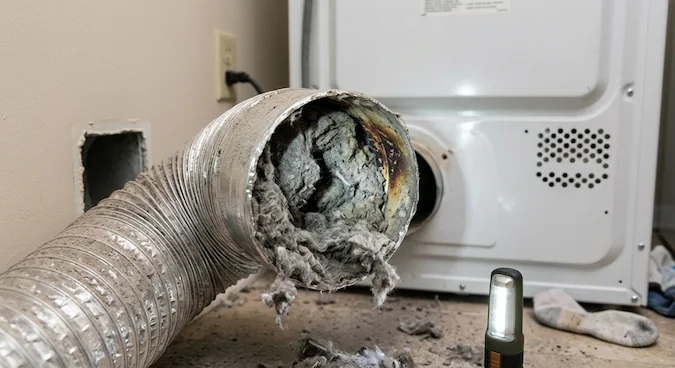
The particulate mix in Silver Spring's air is distinct from what a home in a quieter suburb encounters. Georgia Avenue and Colesville Road carry heavy bus and commercial traffic. The Purple Line construction corridor has generated continuous earthmoving and concrete dust for years. Downtown development around the Metro station adds demolition debris and off-gassing from new materials.
These particles are finer and chemically different from tree pollen or grass clippings. Soot, brake metalwork, and concrete dust contain compounds that bond more aggressively to moist metal surfaces than organic material does. Inside a duct system that was already compromised by retrofit-era joint gaps, this urban particulate accumulates into a dense, dark film that is noticeably harder to remove than the dust found in a typical suburban system.
Our Special Offers
Transparent flat-rate pricing. No counting vents. No surprise add-ons.
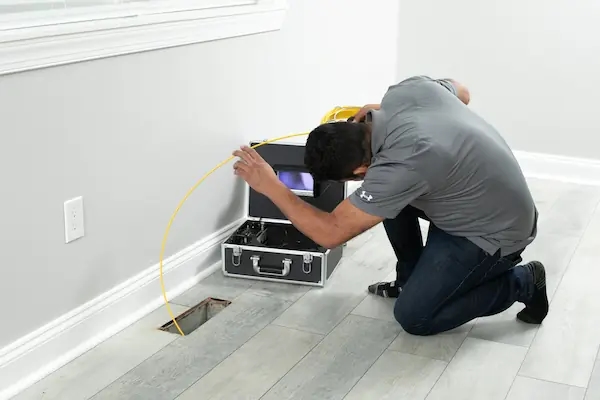
Dryer Vent Cleaning
$199
Professional dryer vent cleaning with rotary brush and high-powered vacuum to reduce fire risk and improve dryer efficiency.
Learn more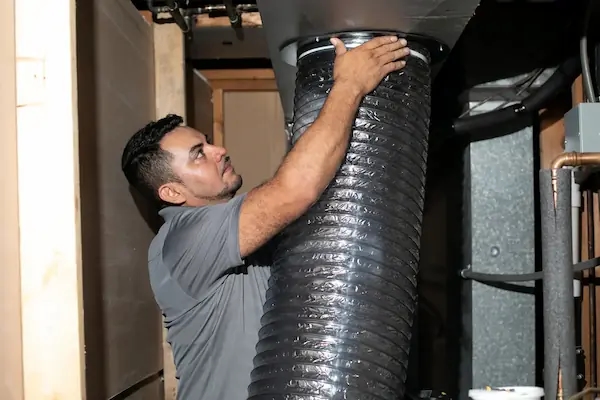
Air Duct Cleaning & Sanitization
$299
Professional cleaning of one complete air duct system with complimentary sanitization upon request and before/after photo proof.
Learn more
Air Duct Cleaning, Dryer Vent Cleaning & Sanitization
$399
Complete air duct system cleaning plus dryer vent cleaning and sanitization — our most popular package.
Learn moreDowntown condos and the stacked-laundry problem
Silver Spring's downtown high-rises and mid-rises pack laundry closets into interior spaces with long exhaust paths. A dryer vent in a tenth-floor unit may run vertically through a shared chase before exiting at the roofline. Lint accumulates at every elbow. Moist exhaust that cannot exit quickly enough raises humidity in the laundry closet, and that humidity migrates into the surrounding ductwork through shared wall cavities.
The combination of lint restriction and moisture dump makes high-rise dryer vents a dual concern: a fire safety issue from the lint and an air quality issue from the humidity feeding microbial growth in adjacent duct runs. Cleaning the dryer vent alone does not address what has already entered the HVAC ductwork, and vice versa.
Recognizing the Silver Spring pattern
Urban duct contamination tends to produce visual and tactile cues that differ from moisture-only problems. Silver Spring homeowners and condo residents commonly report:
- A dark, almost sooty film on supply register faces that leaves a gray residue on a white cloth, distinct from the greenish tint of pollen.
- A stale or slightly chemical odor in the first minutes after the system starts, different from the earthy mustiness of a damp basement alone.
- Dust accumulation on electronics and horizontal surfaces that seems disproportionate to the cleanliness of the rest of the home, especially in rooms near exterior walls facing a busy street.
Addressing retrofitted systems in an urban environment
Because Silver Spring's duct contamination combines urban particulates with moisture in a retrofitted system, effective maintenance addresses both. A professional cleaning removes the bonded film from trunk walls and branch takeoffs. Sealing accessible joints during or after cleaning reduces the infiltration of unconditioned basement air. Upgrading to a MERV-13 filter captures more of the fine urban particles before they reach the trunk interior.
Scheduling and flat-rate options for Silver Spring homes and condos are on the Silver Spring, MD service page. For downtown buildings, mention permit parking or loading-dock requirements when booking. If laundry humidity is part of the picture, pair your appointment with dryer vent cleaning.
Frequently Asked Questions
When should Silver Spring homeowners consider duct cleaning?
When road and corridor dust around Silver Spring leaves gray film on supplies faster than filter changes explain.
Where do I book air duct cleaning for Silver Spring?
Open the Silver Spring service page for flat-rate packages and local dispatch, or call (800) 606-3334 for Silver Spring.
Can Silver Spring duct and dryer vent cleaning happen the same day?
Yes — book ducts, dryer vents, or both in one visit for Silver Spring from the Bethesda crew.
What proof should a Silver Spring cleaning include?
Before-and-after photos of Silver Spring trunks or vents, plus a flat-rate scope agreed before work starts.
Where we schedule from
For booking, use your city page or call our Burke and Bethesda offices. See all cities we serve.
Our offices
Contact Us
Our specialists will contact you immediately. (800) 606-3334 · support@amazonadc.com