Blog
What Happens If You Never Clean Your Air Ducts? Long-Term Consequences for Your Home
· Updated
What happens if you never clean your air ducts? Debris buildup, dryer vents, and when waiting gets costly.
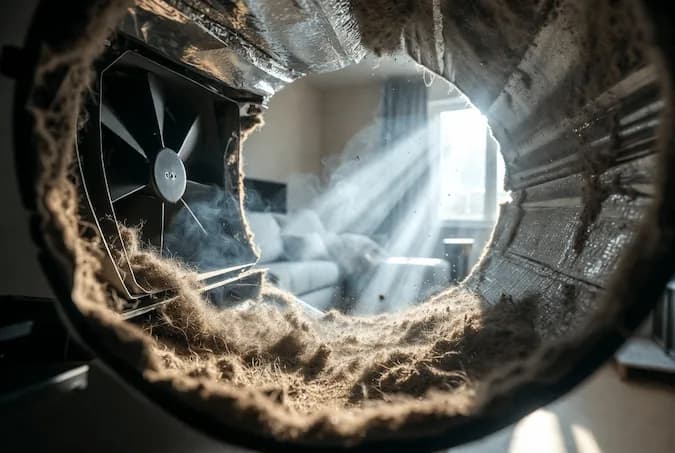
1. Dust recirculates on an endless loop
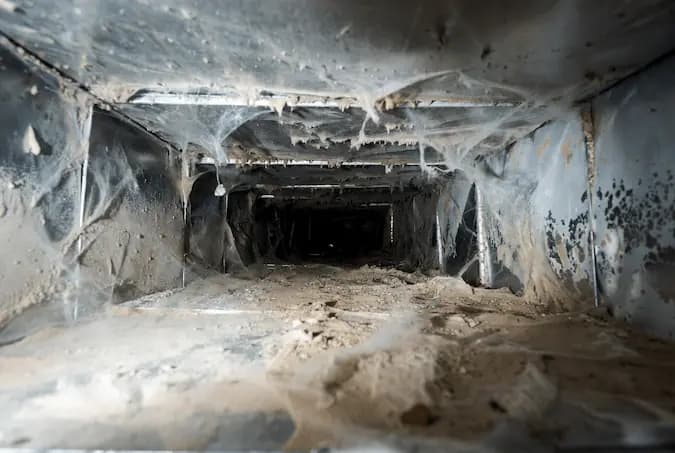
Every HVAC cycle pushes air through the duct network at speed. Anything resting inside — dust, debris, skin cells — gets picked up and deposited on furniture, floors, and shelves in every room. Between cycles, particles settle back into the ducts. The system kicks on again, and the loop restarts.
This is why some homes feel dusty no matter how often they're cleaned. The ducts themselves have become the source, not the surfaces.
- Dust coats duct walls between cycles
- The blower launches it into living spaces when it runs
- Particles land on surfaces, then get pulled back into returns
- The cycle accelerates as the duct-wall layer thickens
2. Debris load and comfort complaints can grow
Years without cleaning can leave a heavier layer of dust and debris on duct surfaces. Some households notice more surface dust or startup odors when the blower runs.
EPA is clear that duct cleaning has not been shown to prevent health problems, and that light dust in ducts is common. We do not claim that neglected ducts cause disease — or that cleaning cures allergies or asthma.
- Fine dust and debris — can discharge from supplies when buildup is substantial
- Pollen and pet dander — may accumulate on returns and trunks in busy homes
- Musty startup smells — often worth inspecting for moisture or visible mold
- Medical symptoms — belong with a clinician; duct cleaning is not a diagnosis or treatment
Our Special Offers
Transparent flat-rate pricing. No counting vents. No surprise add-ons.
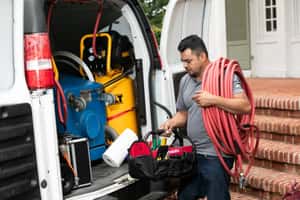
Dryer Vent Cleaning
$199
Professional dryer vent cleaning with rotary brush and high-powered vacuum to reduce fire risk and improve dryer efficiency.
Learn more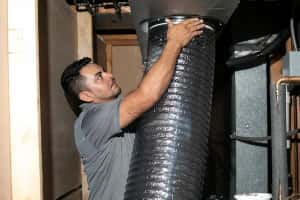
Air Duct Cleaning & Sanitization
$299
Professional cleaning of one complete air duct system with complimentary sanitization upon request and before/after photo proof.
Learn more
Air Duct & Dryer Vent Cleaning Combo
$399
Complete air duct system cleaning plus dryer vent cleaning — our most popular package. Optional antimicrobial on request.
Learn more3. Moisture plus debris can favor mold on hard surfaces
Duct runs that stay dark, dusty, and damp — condensation, leaks, humid basements — can create conditions where mold grows on hard surfaces. When that happens, the blower can move spores through living spaces.
EPA mold guidance notes molds can produce allergens and irritants; sensitive people may react, and mold can trigger asthma attacks in people allergic to mold. Reactions vary. We clean contaminated hard duct surfaces when inspection supports it — we do not diagnose or treat medical conditions.
EPA’s duct guidance also stresses fixing the moisture source, or growth can return. Wet or moldy fiberglass lining often needs replacement, not cleaning alone.
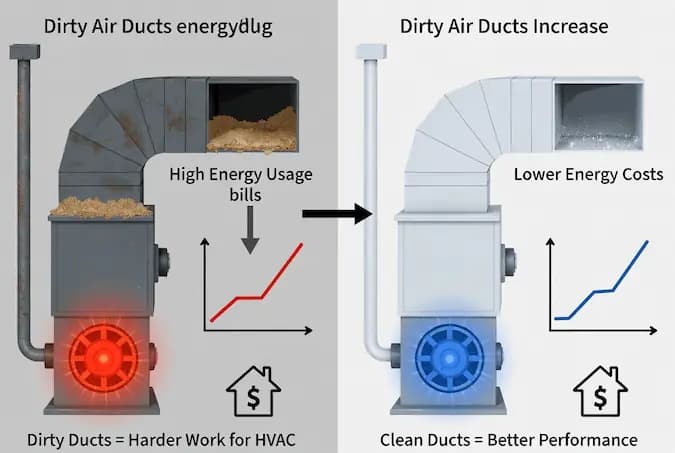
4. Energy use can rise when airflow is restricted — with caveats
Heavy debris can narrow airflow paths in some systems so equipment runs longer to hit the thermostat — when restriction is real. The U.S. Department of Energy notes heating and cooling as major home energy end uses. Separately, EPA says there is little evidence that cleaning only the ducts improves efficiency.
But EPA states there is little evidence that cleaning only the ducts improves efficiency; cleaning coils/fans/heat exchangers may help more. We do not claim a fixed 10–15% bill cut from duct cleaning alone. ENERGY STAR separately notes typical homes can lose about 20–30% of the air in the duct system to leaks — sealing, not dust removal, is the clearer energy fix for that problem.
- The system runs longer to reach the same temperature
- Blower motors and fans strain against restricted airflow
- Some rooms stay stuffy while others feel fine — a sign of uneven blockage
5. HVAC components wear out years ahead of schedule
Restricted airflow and dirty coils can add wear — that is closer to EPA's efficiency notes than promising lower bills from duct cleaning alone.
Replacing an HVAC system costs $5,000–$15,000+. Filter changes, coil maintenance, sealing leaky ducts where needed, and cleaning when debris is substantial are the maintenance stack that reduces strain — not a guarantee that duct cleaning alone extends equipment life by a fixed number of years.
- Evaporator coils coated in dust lose heat-transfer capacity and can freeze, forcing the compressor into overtime.
- Blower motors can experience more wear from longer run times under restricted airflow.
- Heat exchangers can overheat when airflow is restricted — in gas systems, cracks in the exchanger create a carbon monoxide risk.
- Filters clog ahead of schedule, and delayed replacement cascades strain to every downstream component.
6. Pests move in and leave biological contamination behind
Neglected ductwork offers warmth, shelter, and a direct path through the house. Mice, insects, and even birds nest inside ducts, leaving droppings, urine, and carcasses that degrade air quality and produce unmistakable odors.
Rodent droppings in ductwork are a documented health hazard — they can carry hantavirus and other pathogens. If you hear scratching, find droppings near a register, or smell decay from a specific vent, schedule pest control and professional duct cleaning together.
7. Every room smells the same — and not in a good way
A contaminated duct system distributes odors as efficiently as it distributes air. The sources are predictable:
Air fresheners mask the output but can't reach the source. Until the ducts are physically cleaned, every HVAC cycle refreshes the smell.
- Mold and mildew — musty, earthy smell that intensifies with humidity
- Stale dust — a flat, closed-up-house odor noticeable on system startup
- Pet dander and hair — carries a distinct smell that spreads to every room
- Pest residue — droppings and decomposition produce sharp, unpleasant odors
- Smoke residue — tar and nicotine coat duct walls and recirculate the smell indefinitely
When to stop deferring and schedule a cleaning
If any of these apply, the ducts are overdue:
- You cannot remember the last professional cleaning — and visible debris, musty startup smell, or renovation dust makes waiting less reasonable.
- Dust returns to surfaces within days of cleaning, no matter how often you wipe.
- Allergy or asthma symptoms are worse indoors than outside — investigate broadly; ducts are only one possible factor (EPA does not treat duct cleaning as a proven health treatment).
- A musty smell accompanies every blower startup.
- You've finished a renovation — drywall dust and construction debris should be removed before the system resumes normal use.
- You just moved in — the previous owner's maintenance history is unknown. An inspection (and cleaning if debris is substantial) gives you a verified baseline.
Preventing the worst outcomes takes minimal effort
None of the consequences above are inevitable. EPA does not set a mandatory health-based duct-cleaning calendar — habits that slow debris and moisture matter more than any slogan. What we recommend from DMV jobs:
- Change filters on the schedule your equipment and filter manufacturer call for — often every 1–3 months with pets or high dust (EPA on filters and cleaners).
- Book professional duct cleaning when inspection, renovation dust, pets, humidity, or visible debris warrant it — not on a fixed “every 1–3 years” company schedule. EPA leaves timing to condition, not a universal interval.
- Keep routine HVAC service for coils, filters, and safety checks — dirty coils and restricted airflow are separate from duct brush-out (EPA notes component cleaning can matter more for efficiency than ducts alone).
- Wipe register covers when you dust — they're the visible mouth of the duct and the easiest to maintain.
- Aim for indoor humidity in a comfort band many IAQ guides cite around 30–50% (EPA mold moisture; County DEP pages often echo the same range) so moisture is less likely to bond debris inside cool trunks.
The cost of doing nothing compounds every year
Skipping duct cleaning doesn't automatically save money — restricted airflow and heavier debris can add wear and more frequent filter changes. It also doesn't mean every home faces a health crisis; EPA rejects that framing for routine duct cleaning.
Professional cleaning when inspection or renovation debris justifies it removes accumulation you can see documented in before/after photos.
If your ducts have never been cleaned — or if you can't remember the last time — call (800) 606-3334 or visit the air duct cleaning page for a flat-rate quote. We serve the DMV from Burke, VA and Bethesda, MD.
What actually accumulates when ducts go untouched for years
Most homeowners never see inside their ductwork — and that's the problem. Behind every wall and above every ceiling, trunk lines and branch runs collect dust, pollen, pet dander, mold spores, and insect debris with every HVAC cycle.
Unlike a dusty shelf you can wipe clean, duct contamination is invisible and self-reinforcing: the longer it sits, the thicker the layer, and the more the system redistributes it into your living space. Here's what happens when cleaning never makes the calendar.
Frequently Asked Questions
What happens if ducts are never cleaned?
Debris accumulates, airflow can drop, and startup odors become more common — especially in humid climates and pet homes.
Will never cleaning ducts guarantee higher energy bills?
No fixed guarantee. EPA says little evidence shows duct-only cleaning improves efficiency. ENERGY STAR cites leaky ducts (about 20–30% air loss in typical homes) as a clearer energy issue. See our energy bills article for official sources.
Is never cleaning ever okay?
Some lightly used systems stay cleaner longer. Visible dust, musty smells, or renovation debris are reasons not to wait indefinitely.
Will ignoring dryer vents create risk too?
Yes. Lint in dryer ducts is a separate fire and efficiency issue. About once a year is a common habit for many homes (see NFPA dryer-fire research); high laundry volume or long runs may need service more often — separate from air-duct timing.
How do I get back on a maintenance schedule?
Call (800) 606-3334. We quote flat-rate air duct and dryer vent packages before work starts — timing follows what inspection shows, not a mandatory annual duct cycle.
Where we schedule from
For booking, use your city page or call our Burke and Bethesda offices See all cities we serve.
Our offices
Contact Us
Our specialists will contact you immediately. (800) 606-3334 · support@amazonadc.com