Blog
Arts-district renovations, Gateway stacks, and why PG summers sweat at older trunks
Hyattsville's arts-district renovations layer new living spaces over old mechanical systems that were never cleaned between eras. Learn how renovation dust, Prince George's County humidity, and mixed-era ductwork create indoor-air problems specific to Route 1 corridor housing.

Renovation dust enters the old system before the new walls close
Hyattsville's arts district and Gateway area have undergone a wave of renovations transforming early-century brick houses and mid-century apartments into updated living spaces. During a renovation, existing walls are opened, old plaster is demolished, and new drywall is cut and finished — all while the existing HVAC system remains in place. Many contractors run the air handler during renovation to manage dust and temperature. The system dutifully distributes renovation particulate — plaster chunks, drywall gypsum, paint overspray, and demolition debris — through every trunk and branch.
When the renovation finishes, the walls look new. The ductwork behind them holds a record of the construction process. Homeowners who move into a freshly renovated Hyattsville arts-district house and notice chalky white dust on supplies within the first month are seeing renovation residue that was never cleaned from the system before occupancy.
New kitchens above old mechanical rooms
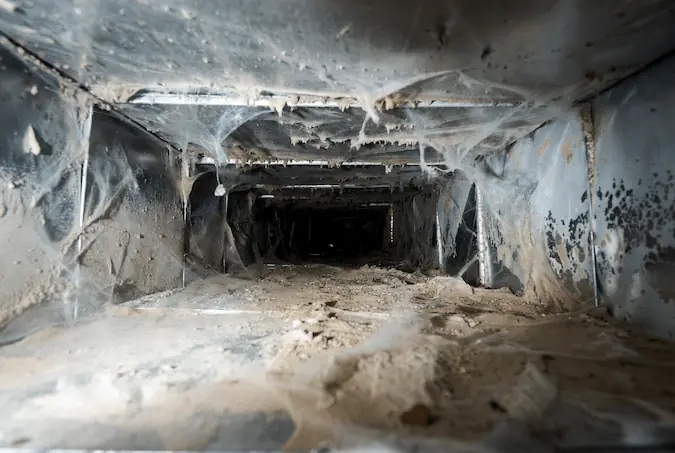
Gateway-area buildings and converted row houses often place renovated living spaces directly above original mechanical rooms that were not part of the renovation scope. The air handler may be 40 years old serving a kitchen that was installed last year. The original ductwork — undersized for the new layout, leaking at joints that were never re-sealed, and carrying decades of accumulated dust — now serves rooms with higher expectations for air quality and comfort.
The mismatch shows up as uneven temperatures (some rooms comfortable, others stuffy), persistent fine dust on new countertops and shelving, and a faint musty undertone that new finishes and fresh paint cannot mask. The smell is not the new materials off-gassing. It is old trunk residue being delivered through a system that predates the renovation by decades.
Our Special Offers
Transparent flat-rate pricing. No counting vents. No surprise add-ons.
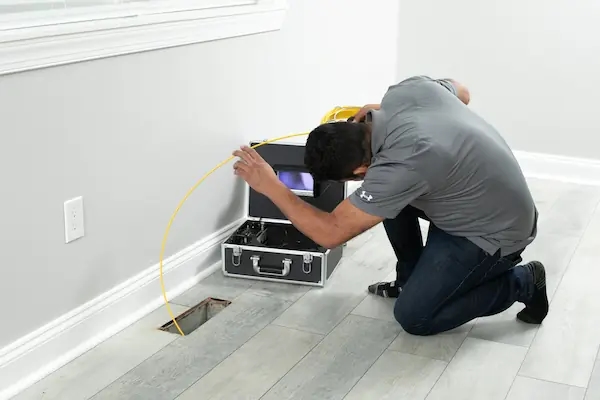
Dryer Vent Cleaning
$199
Professional dryer vent cleaning with rotary brush and high-powered vacuum to reduce fire risk and improve dryer efficiency.
Learn more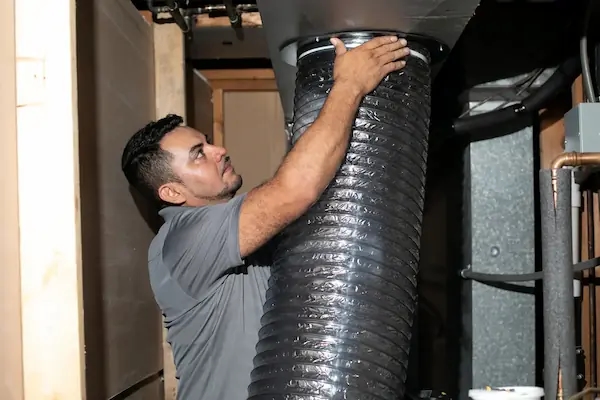
Air Duct Cleaning & Sanitization
$299
Professional cleaning of one complete air duct system with complimentary sanitization upon request and before/after photo proof.
Learn more
Air Duct Cleaning, Dryer Vent Cleaning & Sanitization
$399
Complete air duct system cleaning plus dryer vent cleaning and sanitization — our most popular package.
Learn morePrince George's County summers push dew points that stick
Hyattsville sits in the Route 1 corridor of Prince George's County, where the combination of the Anacostia watershed, the Northeast Branch, and limited elevation produces summer dew points that regularly reach the mid-to-upper 60s Fahrenheit. At those dew points, a 55-degree supply trunk condenses moisture continuously during every cooling cycle. The condensation rate is higher and more persistent than in communities at higher elevations or farther from the watershed.
For ductwork, this means that every particle that enters the system has a wet surface to land on. Household dust, pet dander, renovation residue, and Route 1 traffic particulate all bond to the condensation layer and stay. The result is a trunk coating that grows through each humid season and does not shed during winter because the coating has partially hardened by the time heating season arrives.
Indicators that mixed-era ductwork needs attention
Renovated properties in Hyattsville present a specific set of symptoms tied to the combination of construction residue, old mechanical systems, and PG-county humidity:
- White or chalky dust on supply registers in a unit that was recently renovated — this is gypsum residue from the renovation, not normal household dust.
- A musty smell that persists despite new finishes, fresh paint, and clean surfaces — the source is inside the trunks, not in the living space materials.
- Registers in different rooms producing noticeably different air temperatures — indicating the old duct system was not rebalanced for the new layout.
- A shared dryer chase that heats up noticeably when any unit in the building runs a dryer — back-pressure from lint buildup in the shared chase affects all connected units.
Post-renovation duct cleaning and ongoing care
The ideal time to clean ductwork in a renovated property is after the last finishes are applied but before the new occupant moves in furniture. If that window was missed, the system still benefits from cleaning — it just takes slightly longer because household dust has begun layering over the renovation residue. For Hyattsville scheduling and service options, visit the Hyattsville location page. If the building has stacked dryer chases, combine dryer vent cleaning with the duct service to address both humidity contributors in one visit.
- If you bought or rented a recently renovated unit, ask the previous owner or landlord whether duct cleaning was included in the renovation scope — in most cases it was not.
- Keep basement and lower-level humidity below 50 percent from May through October with a standalone dehumidifier; the Anacostia-watershed moisture is persistent enough that AC dehumidification alone is rarely sufficient.
- Replace filters every 30 days for the first six months after a renovation to capture the residual construction fines that continue dislodging from trunk walls during normal operation.
- If the building has a shared dryer chase, coordinate annual vent cleaning with other units — a single clogged unit's back-pressure affects everyone on the chase.
Frequently Asked Questions
When should Hyattsville homeowners consider duct cleaning?
When musty startup smells return each humid week, or cool Hyattsville trunks keep turning dust into a sticky film.
Where do I book air duct cleaning for Hyattsville?
Open the Hyattsville service page for flat-rate packages and local dispatch, or call (800) 606-3334 for Hyattsville.
Can Hyattsville duct and dryer vent cleaning happen the same day?
Yes — book ducts, dryer vents, or both in one visit for Hyattsville from the Bethesda crew.
Does a dehumidifier replace duct cleaning in Hyattsville?
Lower humidity helps Hyattsville basements, but it does not remove debris already sitting in trunks. Cleaning and moisture control work together.
Where we schedule from
For booking, use your city page or call our Burke and Bethesda offices. See all cities we serve.
Our offices
Contact Us
Our specialists will contact you immediately. (800) 606-3334 · support@amazonadc.com