Blog
Old Town Humidity and Alexandria Air Duct Moisture: What Homeowners Notice First
Alexandria's proximity to the Potomac creates persistent humidity that loads moisture into older ductwork. Learn how historic homes, waterfront condos, and West End splits each respond.

Living near the Potomac means living inside its humidity envelope
Alexandria's geography places its densest residential areas within two miles of the Potomac River. Old Town sits directly on the waterfront. Del Ray occupies slightly higher ground but remains well within the humidity zone that the river generates from May through October. The West End extends farther inland but still receives moisture-laden air pushed up the Eisenhower Valley corridor on prevailing summer winds.
This is not abstract climate data. It is the reason an Alexandria homeowner notices that outdoor furniture stays damp longer than at a friend's house in Centreville, that bathroom mirrors fog faster, and that the basement has a persistent clamminess even with the windows closed. The same moisture that does those visible things also does invisible things inside the HVAC ductwork — and those invisible effects accumulate over years.
Old Town and Del Ray: historic charm meets modern moisture loads

Alexandria's oldest homes — the Federal-era row houses on Prince Street, the Victorian semis in Del Ray, the mid-century ramblers near Braddock Road — were built with brick, plaster, and timber that breathe. They absorb moisture when the air is humid and release it when conditions dry out. This is good for the masonry. It is problematic for HVAC ductwork, because the building itself becomes a moisture reservoir that feeds humidity into the air surrounding the ducts.
When central air was retrofitted into these homes, the duct runs were tucked into the spaces available — along basement ceilings, through crawl spaces, inside chases carved out of closets. These paths are surrounded by porous masonry that has been absorbing Potomac-valley moisture for a century or more. The ducts sit in a perpetually damp environment that no amount of above-ground dehumidification fully addresses.
Our Special Offers
Transparent flat-rate pricing. No counting vents. No surprise add-ons.
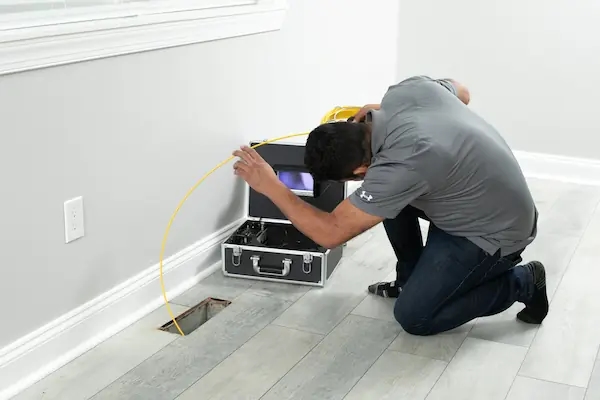
Dryer Vent Cleaning
$199
Professional dryer vent cleaning with rotary brush and high-powered vacuum to reduce fire risk and improve dryer efficiency.
Learn more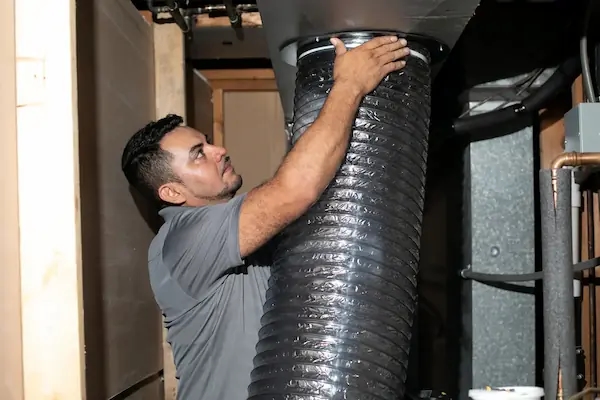
Air Duct Cleaning & Sanitization
$299
Professional cleaning of one complete air duct system with complimentary sanitization upon request and before/after photo proof.
Learn more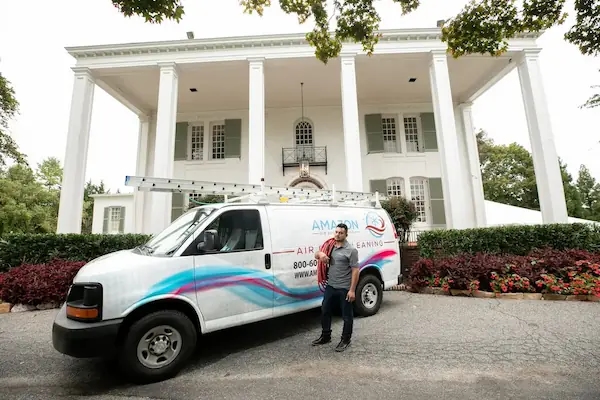
Air Duct Cleaning, Dryer Vent Cleaning & Sanitization
$399
Complete air duct system cleaning plus dryer vent cleaning and sanitization — our most popular package.
Learn moreWaterfront condos and the sealed-building paradox
The newer glass-and-concrete buildings along the Alexandria waterfront — Potomac Yard, Old Town North, the Robinson Landing area — are built with modern vapor barriers and tight envelopes. In theory, they should manage humidity better than a 200-year-old row house. In practice, the internal moisture sources — cooking, showers, laundry, and the breath of residents — have nowhere to go in a tightly sealed space except through the HVAC system.
Stacked laundry closets in these buildings add a concentrated moisture source. The dryer vent runs vertically through a shared chase and exits at the roof, collecting lint at every floor-level joint. When the vent partially blocks, exhaust moisture backs up into the laundry closet and raises humidity in the surrounding wall cavity. That cavity may share framing with the unit's HVAC ductwork, creating a moisture bridge that operates independently of the building's exterior envelope.
How Alexandria's moisture shows up indoors
The river-humidity effect on ductwork produces symptoms that are stubbornly persistent rather than dramatic. Alexandria homeowners typically describe a slow escalation rather than a sudden event:
- A faint mustiness from supply registers that was not there when you moved in, gradually becoming the normal smell of the house over two or three years.
- Condensation on the outside of supply register boots in the basement or first floor — visible as droplets or water stains on the surrounding drywall or ceiling tile.
- A persistent need to dust surfaces near supply vents more frequently than surfaces in other parts of the house, as the air from contaminated trunks deposits debris directly below the register.
Managing river-zone ductwork for the long term
Alexandria's proximity to the Potomac means humidity is a permanent condition, not a temporary challenge. Effective duct maintenance accounts for this by combining periodic professional cleaning with ongoing moisture control. A dehumidifier in the basement or crawl space, set to maintain relative humidity below fifty percent, reduces the rate at which condensation re-forms on trunk surfaces after cleaning.
For scheduling and flat-rate packages specific to Alexandria homes and condos, visit the Alexandria, VA service page. Waterfront condo residents should add dryer vent cleaning — shared-chase vents in high-rise buildings are both a fire-safety priority and a moisture-management necessity.
Frequently Asked Questions
When should Alexandria homeowners consider duct cleaning?
When musty startup smells return each humid week, or cool Alexandria trunks keep turning dust into a sticky film.
Where do I book air duct cleaning for Alexandria?
Open the Alexandria service page for flat-rate packages and local dispatch, or call (800) 606-3334 for Alexandria.
Can Alexandria duct and dryer vent cleaning happen the same day?
Yes — book ducts, dryer vents, or both in one visit for Alexandria from the Burke crew.
Does a dehumidifier replace duct cleaning in Alexandria?
Lower humidity helps Alexandria basements, but it does not remove debris already sitting in trunks. Cleaning and moisture control work together.
Where we schedule from
For booking, use your city page or call our Burke and Bethesda offices. See all cities we serve.
Our offices
Contact Us
Our specialists will contact you immediately. (800) 606-3334 · support@amazonadc.com