Blog
Carroll Creek cellars, Urbana pads, and why the I-270 north end is two indoor-air problems
Frederick combines downtown brick cellars with Urbana-corridor new construction — two distinct duct problems under one city name. Here's what each one looks like inside the HVAC.

One zip code, two completely different duct problems
A homeowner on Market Street and a homeowner in an Urbana townhome both live in Frederick. Their HVAC systems fail in opposite ways. The downtown house has a 19th-century cellar where stone walls wick groundwater and original trunks rust at the joints. The Urbana house is three years old, airtight, and still blowing fine white gypsum onto dark furniture because the builder ran the air handler during construction.
Understanding which problem your house has — moisture-driven buildup or construction-phase contamination — changes when you should clean, what the crew will find, and how to maintain the system afterward.
Carroll Creek cellars and what brick does to indoor humidity
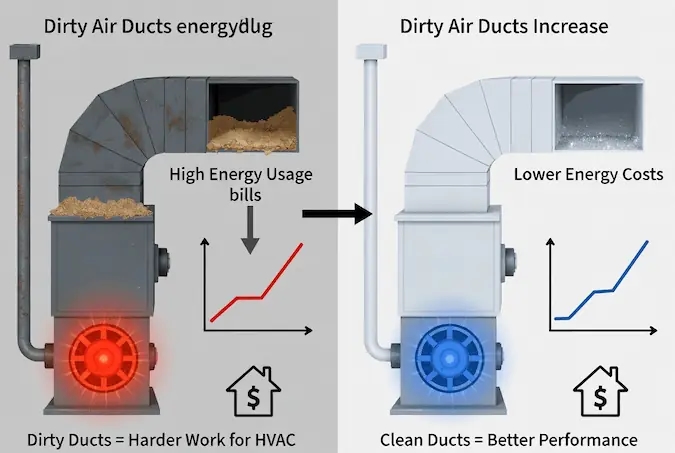
Frederick's historic core sits along Carroll Creek, a waterway that once flooded regularly before the city rerouted it. The cellars beneath Market Street, East Patrick, and the surrounding blocks were built with local limestone and mortar that has absorbed and released moisture for over two centuries. Central air was added generations later, and the ductwork often threads between joists only inches above a cellar floor that never fully dries.
When the AC cycles on a July afternoon, the supply trunks drop well below the dew point of the cellar air. Moisture condenses on both the interior and exterior of the metal. Organic dust — pollen, fabric fibers, skin cells — bonds to that wet surface. Over several seasons the buildup becomes a visible dark film that no amount of filter changes will reach.
Our Special Offers
Transparent flat-rate pricing. No counting vents. No surprise add-ons.
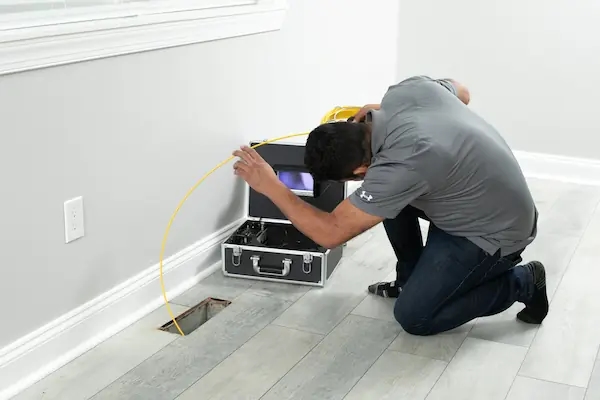
Dryer Vent Cleaning
$199
Professional dryer vent cleaning with rotary brush and high-powered vacuum to reduce fire risk and improve dryer efficiency.
Learn more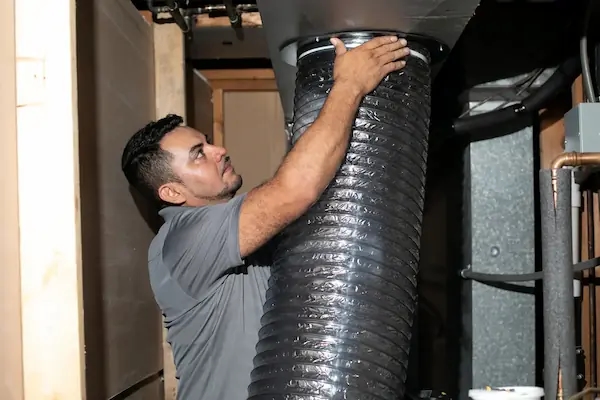
Air Duct Cleaning & Sanitization
$299
Professional cleaning of one complete air duct system with complimentary sanitization upon request and before/after photo proof.
Learn more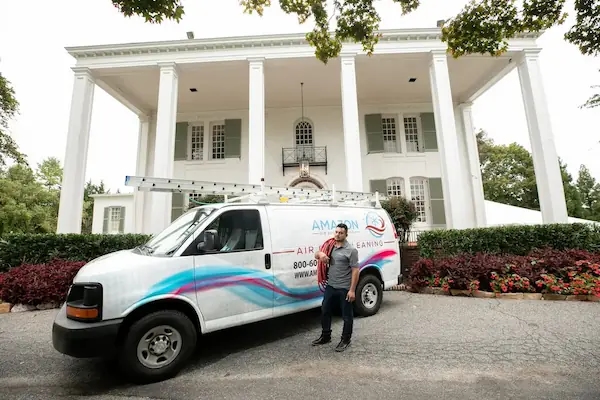
Air Duct Cleaning, Dryer Vent Cleaning & Sanitization
$399
Complete air duct system cleaning plus dryer vent cleaning and sanitization — our most popular package.
Learn moreUrbana pads and the gypsum that outlasts the builder's warranty
South and east of downtown, Urbana, Adamstown, and Lake Linganore have added thousands of homes in the past fifteen years. During construction the HVAC system runs to control humidity while drywall tape cures and paint dries. That air is loaded with gypsum fines — particles light enough to travel through return ducts and settle on every interior surface downstream of the filter.
Builders often tape registers shut during this phase, but tape lifts at the edges and fines enter anyway. First owners discover the problem when they notice a chalky residue on shelving weeks after move-in, or when the brand-new filter turns gray in half the expected time. The gypsum is already embedded in trunk seams where airflow turbulence deposited it. Standard filter replacement only catches what passes the filter going forward.
How to tell which Frederick duct problem you have
The two problems leave different fingerprints. Moisture-driven buildup in a downtown cellar tends to announce itself through smell — a faint earthiness that strengthens when the system starts and fades once it runs continuously. Construction-phase gypsum announces itself through sight — a persistent white or light-gray dust on surfaces near supply registers. Some Frederick homes have both, especially renovated downtown properties where drywall was hung over old plaster.
- Downtown cellar clue: a damp, earthy smell that intensifies after a rainy week and lingers even with windows open.
- New-construction clue: a fine powder on shelves and electronics near supply vents that reappears days after dusting.
- Shared clue: dryer loads taking longer than expected, especially in a stacked townhome closet with limited exhaust routing.
Matching the maintenance to the problem
A cellar-humidity home needs a dehumidifier running through the warm months plus periodic duct cleaning to remove what the damp seasons deposited. A new-construction home needs an initial post-occupancy cleaning to clear gypsum and then benefits from standard maintenance intervals afterward. Either way, the cleaning resets the system to a state that filters can actually maintain.
Scheduling and flat-rate details for both scenarios are on the Frederick, MD service page. If the dryer closet stays warm after a cycle finishes, pair your duct appointment with a dryer vent cleaning — especially relevant in Urbana townhomes where vent runs are long and kinked.
Frequently Asked Questions
When should Frederick homeowners consider duct cleaning?
When musty startup smells return each humid week, or cool Frederick trunks keep turning dust into a sticky film.
Where do I book air duct cleaning for Frederick?
Open the Frederick service page for flat-rate packages and local dispatch, or call (800) 606-3334 for Frederick.
Can Frederick duct and dryer vent cleaning happen the same day?
Yes — book ducts, dryer vents, or both in one visit for Frederick from the Bethesda crew.
Does a dehumidifier replace duct cleaning in Frederick?
Lower humidity helps Frederick basements, but it does not remove debris already sitting in trunks. Cleaning and moisture control work together.
Where we schedule from
For booking, use your city page or call our Burke and Bethesda offices. See all cities we serve.
Our offices
Contact Us
Our specialists will contact you immediately. (800) 606-3334 · support@amazonadc.com