Blog
Mall-area stacks, Fair Lakes closets, and why this is not the City of Fairfax page
Fair Oaks townhomes near the I-66/Route 50 interchange put attic air handlers above the living space, pulling hot air down through corridor dust. Learn why the upstairs-down airflow pattern in these 1980s–2000s homes creates a specific dust and moisture profile that ground-level systems do not.

Attic air handlers run hot before they run cold
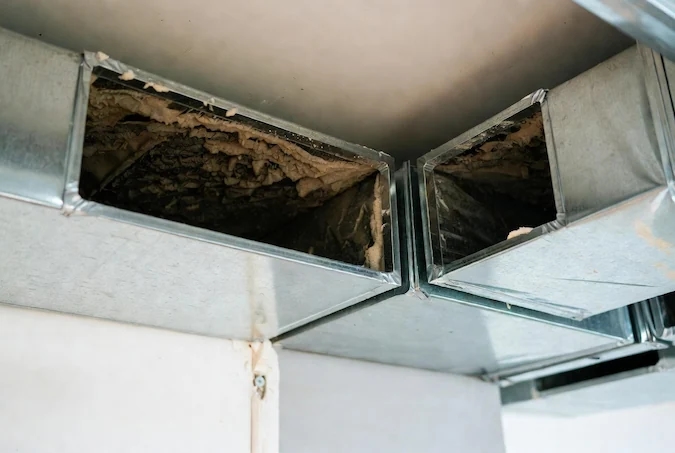
In a Fair Oaks or Fair Lakes townhome, the air handler typically sits in an unconditioned attic space. On a July afternoon the attic temperature can reach 130 degrees or higher. When the thermostat calls for cooling, the blower pushes 130-degree attic air through the ductwork for the first several minutes before the evaporator coil brings the supply temperature down. During that initial burst, thermal expansion in the metal duct joints opens microscopic gaps. Settled dust in the trunk re-suspends in the hot turbulent air and exits through supply registers as a visible puff.
This is why Fair Oaks homeowners sometimes see a burst of dust when the system starts, then nothing visible during steady operation. The startup thermal shock is dislodging accumulated particles. Each cycle removes a small amount from the trunks and deposits it on furniture and floors — but the bulk remains bonded to the trunk walls because it resettles as soon as the air cools and slows.
The I-66/Route 50 interchange is always feeding the returns
Fair Oaks Mall, West Ox Road, and the Fairfax Corner area sit in a triangle formed by I-66 and Route 50. Traffic volume on these roads is high during both commute peaks and weekend shopping. The particulate profile includes standard brake and tire-wear dust, plus a heavier diesel-soot component from the commercial truck traffic serving the mall and retail centers.
Return grilles in Fair Oaks townhomes face courtyards and parking areas that sit below the elevation of the road embankments. Particulate from the interchange settles downhill into these low pockets. A unit on the interchange side of a townhome row gets a measurably higher dust load than a unit facing the interior of the community — same building, same system age, different exposure.
Our Special Offers
Transparent flat-rate pricing. No counting vents. No surprise add-ons.
Dryer Vent Cleaning
$199
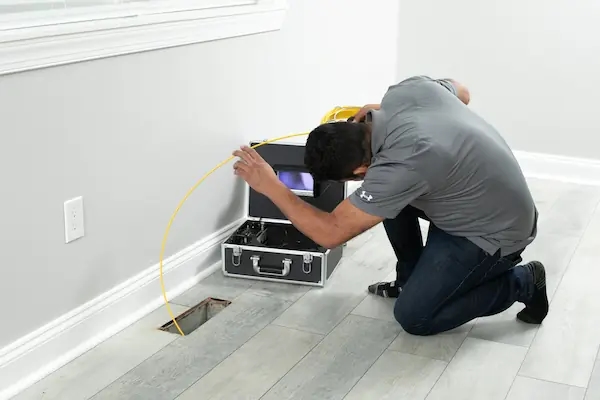
Professional dryer vent cleaning with rotary brush and high-powered vacuum to reduce fire risk and improve dryer efficiency.
Learn more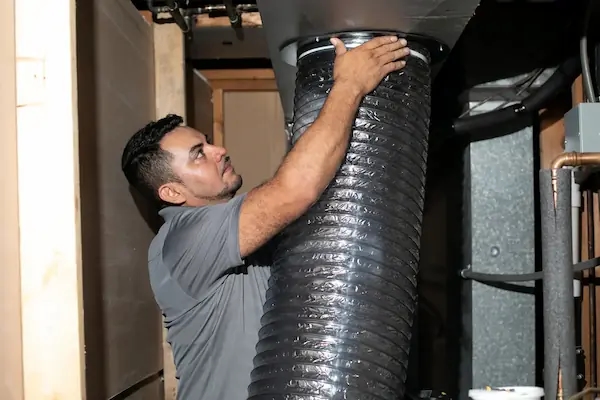
Air Duct Cleaning & Sanitization
$299
Professional cleaning of one complete air duct system with complimentary sanitization upon request and before/after photo proof.
Learn more
Air Duct Cleaning, Dryer Vent Cleaning & Sanitization
$399
Complete air duct system cleaning plus dryer vent cleaning and sanitization — our most popular package.
Learn moreFair Oaks is a different housing stock from Old Town Fairfax
The City of Fairfax has 1950s–80s colonials and ramblers with basement air handlers. Fair Oaks — a census-designated place, not an incorporated city — is dominated by 1980s–2000s townhomes and attached singles with attic-mounted systems. The duct problems in each area are mechanically different. Old Town Fairfax deals with basement humidity and cold-trunk condensation. Fair Oaks deals with attic heat, thermal cycling, and interior dryer chases.
If you live inside the City of Fairfax boundaries (Old Town, Mosby Woods, Fairfax Circle), the patterns described here may not match your house. This post is about the mall-grid housing stock specifically.
Signs the attic system is delivering more than conditioned air
Fair Oaks townhome ductwork occupies a unique thermal zone. These indicators are tied to the attic-handler layout:
- A visible dust puff from a supply register during the first two to three minutes of a cooling cycle, especially after the system has been off for several hours.
- Dark streaks on the ceiling around supply registers — caused by particles carried in the hot startup air settling along the cooler ceiling surface.
- Consistently warmer air from upstairs registers compared to downstairs, even after the system has run for 20 minutes — indicating the attic ductwork is absorbing and radiating heat into the supply stream.
- A laundry closet on an upper floor that stays noticeably warm and humid between loads, with the dryer needing extended run times.
Managing dust in an attic-handler townhome
The attic-handler layout cannot be changed without a major renovation, but the dust cycle it creates can be interrupted. For Fair Oaks service options and flat-rate scheduling, visit the Fair Oaks location page. Combine duct work with dryer vent cleaning if the dryer chase runs to a shared roof cap — both access points are in the attic zone.
- If the attic air handler is on an accessible platform, verify that the return-side cabinet door seals completely — a gap here pulls unfiltered attic air directly into the system.
- Consider adding R-8 duct insulation sleeves to exposed supply trunks in the attic; this reduces the temperature swing during startup and slows the thermal cycling that dislodges settled dust.
- Replace filters every 30 days from May through September when attic temperatures are highest and the thermal stress on duct joints is greatest.
- Schedule dryer-chase cleaning annually — the shared roof cap in many Fair Oaks townhome rows restricts exhaust from multiple units simultaneously.
Frequently Asked Questions
When should Fair Oaks homeowners consider duct cleaning?
During and after peak canopy season if upstairs supplies in Fair Oaks show yellow film again soon after wiping registers.
Where do I book air duct cleaning for Fair Oaks?
Open the Fair Oaks service page for flat-rate packages and local dispatch, or call (800) 606-3334 for Fair Oaks.
Can Fair Oaks duct and dryer vent cleaning happen the same day?
Yes — book ducts, dryer vents, or both in one visit for Fair Oaks from the Burke crew.
Will better filters stop Fair Oaks pollen in the ducts?
Better filters reduce new Fair Oaks pollen load. They do not pull film already coating cool supply trunks.
Where we schedule from
For booking, use your city page or call our Burke and Bethesda offices. See all cities we serve.
Our offices
Contact Us
Our specialists will contact you immediately. (800) 606-3334 · support@amazonadc.com