Blog
Potomac moisture, old metal trunks, and why District registers go musty
DC row houses were built before air conditioning existed. How retrofitted ductwork, English basements, and river-valley humidity load moisture and debris into trunks.

A city built for coal heat and open windows, now sealed and cooled
Washington's residential core — Capitol Hill, Georgetown, Shaw, Petworth, Brookland — was constructed in an era when heating came from coal or oil and cooling came from high ceilings, transom windows, and shade trees. Central HVAC was added to these row houses decades after construction, often by threading sheet-metal ducts through joist bays, along English-basement ceilings, and up through interior walls that were never framed to accommodate them.
The result is a duct system that follows a winding path through the house rather than the direct, planned routing of a modern build. Every bend creates a low-velocity zone where particles settle. Every joint between old timber and new sheet metal is a potential gap where unconditioned air enters the supply stream. And every foot of duct that runs through or above the English basement is exposed to the moisture that the basement generates year-round.
Row-house shared walls and moisture migration
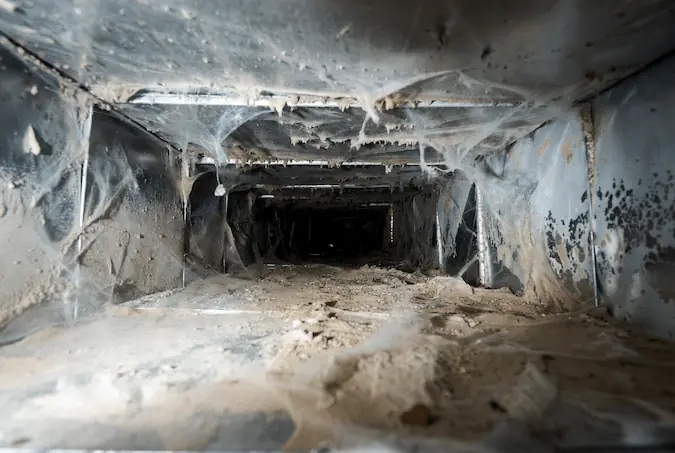
A detached suburban home manages moisture through its own four walls. A DC row house shares two of its walls with adjacent buildings, and those party walls create a moisture pathway that does not exist in freestanding construction. If one unit has an unfinished basement while the neighbor's is sealed and dehumidified, moisture migrates through the shared masonry toward the drier space, passing through wall cavities where duct runs may be routed.
This means a homeowner who has done everything right — sealed the basement, installed a dehumidifier, replaced the windows — can still find moisture entering the duct system through the party wall. The source is not inside their home but embedded in the shared infrastructure of row-house construction. Understanding this pathway explains why some homes develop musty duct odors despite aggressive moisture control at the floor level.
Our Special Offers
Transparent flat-rate pricing. No counting vents. No surprise add-ons.
Dryer Vent Cleaning
$199
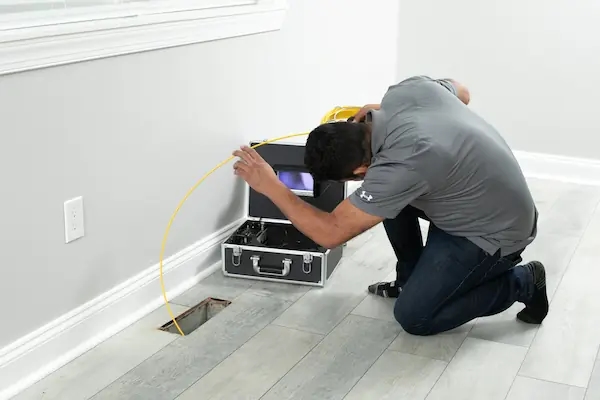
Professional dryer vent cleaning with rotary brush and high-powered vacuum to reduce fire risk and improve dryer efficiency.
Learn more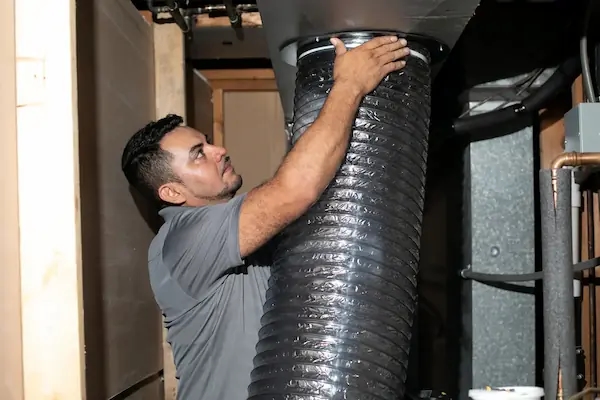
Air Duct Cleaning & Sanitization
$299
Professional cleaning of one complete air duct system with complimentary sanitization upon request and before/after photo proof.
Learn more
Air Duct Cleaning, Dryer Vent Cleaning & Sanitization
$399
Complete air duct system cleaning plus dryer vent cleaning and sanitization — our most popular package.
Learn moreEnglish basements: rental income upstairs, moisture source below
Many DC row houses contain English basements — semi-below-grade units with their own entrance that are commonly rented as separate apartments. These spaces have exterior walls that sit partially underground, limited natural ventilation, and plumbing penetrations that allow ground moisture to enter. When the upper unit's HVAC system draws return air from the main floor, it also pulls air through floor gaps, stairwell connections, and duct leaks that communicate with the lower-level environment.
The English basement effectively becomes an uncontrolled humidity source feeding the upper unit's duct system. Cooking moisture, shower steam, and ground-level damp from the basement tenant's space mix with the air that the upstairs air handler processes. Over a full humid season, the interior of the supply trunks develops a coating that is part condensation residue, part organic particulate, and entirely out of reach of any filter.
How District residents notice duct-related moisture and debris issues
DC row-house symptoms tend to be persistent rather than seasonal because the moisture source — the basement, the shared walls, the urban humidity — operates year-round, not just during pollen season. Common observations include:
- A cellar-like smell from supply registers that intensifies in the first minutes after the system starts and never fully disappears, even in winter.
- Dark residue around register edges that reappears within days of wiping, particularly on first-floor and basement-level vents.
- Musty startup smells, more dust near supplies, or discomfort that seems worse at home than elsewhere — investigate filters, humidity, and ducts; do not treat cleaning as a medical diagnosis.
Working with DC's architecture instead of against it
Effective duct maintenance in a DC row house acknowledges the building's limitations rather than expecting it to perform like new construction. Professional cleaning removes the accumulated film and debris from trunk walls and branch connections. Sealing accessible duct joints reduces the infiltration of basement and party-wall moisture. Running a dehumidifier in the English basement — even if it is a separate rental unit — helps keep humidity lower for the whole building.
Scheduling details and flat-rate packages for all DC neighborhoods are on the Washington, DC service page. High-rise and condo residents along the waterfront should add dryer vent cleaning — shared-chase vent runs in Navy Yard and Wharf buildings commonly exceed the length that homeowner maintenance can effectively reach.
Frequently Asked Questions
When should Washington, DC homeowners consider duct cleaning?
When musty startup smells return each humid week, or cool Washington, DC trunks keep turning dust into a sticky film.
Where do I book air duct cleaning for Washington, DC?
Open the Washington, DC service page for flat-rate packages and local dispatch, or call (800) 606-3334 for Washington, DC.
Can Washington, DC duct and dryer vent cleaning happen the same day?
Yes — book ducts, dryer vents, or both in one visit for Washington, DC from the Burke and Bethesda crew.
Does a dehumidifier replace duct cleaning in Washington, DC?
Lower humidity helps Washington, DC basements, but it does not remove debris already sitting in trunks. Cleaning and moisture control work together.
Where we schedule from
For booking, use your city page or call our Burke and Bethesda offices. See all cities we serve.
Our offices
Contact Us
Our specialists will contact you immediately. (800) 606-3334 · support@amazonadc.com