Blog
High occupancy, campus trees, and why Route 1 houses stay dusty between tenants
College Park rentals near UMD turn over fast with filters rarely changed. Learn how high occupancy and campus pollen load ductwork — and why turnover cleaning matters.

Why high-turnover rental ductwork deteriorates faster
A typical owner-occupied suburban home has one family, a predictable schedule, and a filter change reminder on the fridge. A College Park rental off Route 1 or Knox Road may have four to six occupants rotating annually, each assuming the previous tenant handled maintenance. Filters go unchanged for entire lease terms. Dryer lint screens get cleaned unevenly. The HVAC system runs more hours per day than a comparable home because more people are cooking, showering, and doing laundry.
That heavier use accelerates debris accumulation inside the ductwork. More airflow hours mean more opportunities for pollen, cooking grease vapor, pet dander, and fabric fibers to enter the return system and deposit on trunk walls. By the time a property manager does a make-ready clean between tenants, the surfaces look acceptable — but the inside of the ducts holds everything the last twelve months deposited.
University of Maryland's canopy is a pollen factory next door

The UMD campus contains thousands of mature trees — oaks, pines, sweetgums, and ornamental species planted over more than a century. During spring the pollen output drifts across Route 1 and into the residential neighborhoods of College Park, Berwyn Heights, and Adelphi. Homes within a few blocks of campus receive a measurably higher pollen load than homes farther east toward Greenbelt.
Rental properties are especially vulnerable because they tend to have older single-pane windows, poorly sealed door frames, and return grilles positioned near ground level where pollen concentrations are highest. The result is a yellow-green film inside supply trunks that builds each April and May, layer upon layer, year after year, until someone actually opens the duct and looks.
Our Special Offers
Transparent flat-rate pricing. No counting vents. No surprise add-ons.
Dryer Vent Cleaning
$199
Professional dryer vent cleaning with rotary brush and high-powered vacuum to reduce fire risk and improve dryer efficiency.
Learn more
Air Duct Cleaning & Sanitization
$299
Professional cleaning of one complete air duct system with complimentary sanitization upon request and before/after photo proof.
Learn more
Air Duct Cleaning, Dryer Vent Cleaning & Sanitization
$399
Complete air duct system cleaning plus dryer vent cleaning and sanitization — our most popular package.
Learn moreRental dryer vents and the fire risk nobody mentions at lease signing
College Park rental homes frequently have laundry in a basement or a first-floor closet with a vent that exits through a cinderblock foundation wall. Lint accumulates at every connection point and at the wall penetration. In a high-occupancy home where the dryer runs multiple loads daily, the vent can pack to the point of near-total blockage within a single lease cycle.
A blocked dryer vent does two things: it forces the dryer to run hotter and longer, creating a fire hazard, and it dumps moisture and lint back into the laundry area, where the HVAC return grille pulls both into the duct system. Property managers who include dryer vent cleaning in their turnover checklist address both the fire risk and the air quality chain in a single step.
What tenants and property managers should watch for
The signals differ slightly depending on whether you are a tenant noticing a problem during occupancy or a manager evaluating between leases:
- Tenant signal: persistent dust on furniture and electronics that returns within a day of cleaning, regardless of how often the floors are swept or vacuumed.
- Manager signal: a musty or stale smell when entering the property after it has been closed for a week between tenants, despite having cleaned all visible surfaces.
- Shared signal: dryer loads taking forty-five minutes or more when they should finish in thirty, especially in summer when ambient humidity is already high.
Building duct cleaning into the turnover schedule
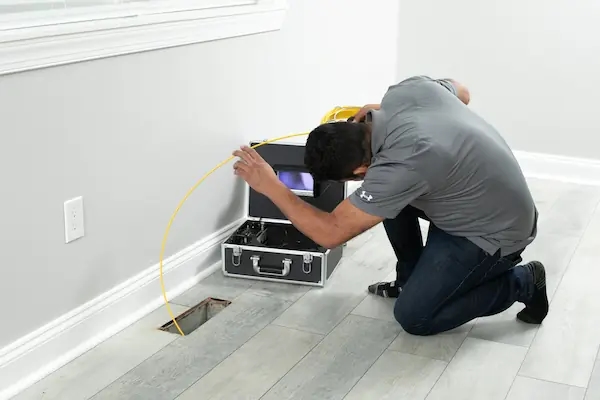
The most cost-effective approach for College Park rental properties is to include duct and dryer vent cleaning as a standard turnover expense rather than waiting for a complaint. A single appointment between tenants resets the system, reduces the odor and dust that trigger early maintenance calls, and documents the condition of the ductwork with before-and-after photos useful for lease-end disputes.
Scheduling and flat-rate packages for College Park properties are on the College Park, MD service page. Pair every duct appointment with dryer vent cleaning — clearing lint reduces dryer fire risk, and removing renovation or tenant debris from ducts resets the system between leases.
Frequently Asked Questions
When should College Park homeowners consider duct cleaning?
During and after peak canopy season if upstairs supplies in College Park show yellow film again soon after wiping registers.
Where do I book air duct cleaning for College Park?
Open the College Park service page for flat-rate packages and local dispatch, or call (800) 606-3334 for College Park.
Can College Park duct and dryer vent cleaning happen the same day?
Yes — book ducts, dryer vents, or both in one visit for College Park from the Bethesda crew.
Will better filters stop College Park pollen in the ducts?
Better filters reduce new College Park pollen load. They do not pull film already coating cool supply trunks.
Where we schedule from
For booking, use your city page or call our Burke and Bethesda offices. See all cities we serve.
Our offices
Contact Us
Our specialists will contact you immediately. (800) 606-3334 · support@amazonadc.com