How Dirty Air Ducts Increase Your Energy Bills
In this guide:
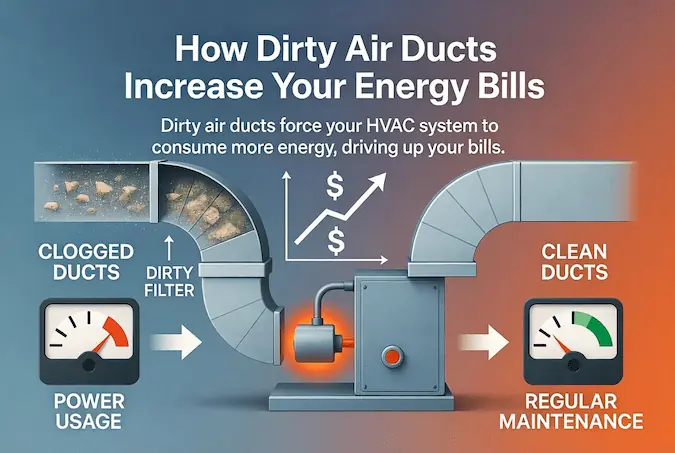
Your heating and cooling system accounts for a large portion of your home's total energy consumption. When air ducts become clogged with dust, debris, and contaminants, your HVAC unit is forced to work significantly harder — and that extra effort shows up directly on your utility bill. Understanding the connection between dirty ducts and rising energy costs can help you take action before the problem gets worse.
The Hidden Cost of Dirty Air Ducts
Most homeowners associate rising energy bills with aging appliances, seasonal changes, or rate increases from their utility provider. What many overlook is the role their duct system plays in HVAC efficiency.
Air ducts form the distribution network of your heating and cooling system. When that network becomes obstructed by accumulated dust and debris, the entire system becomes less efficient — consuming more energy to deliver the same level of comfort. The result is higher utility costs month after month.
How Dirty Ducts Affect HVAC Efficiency
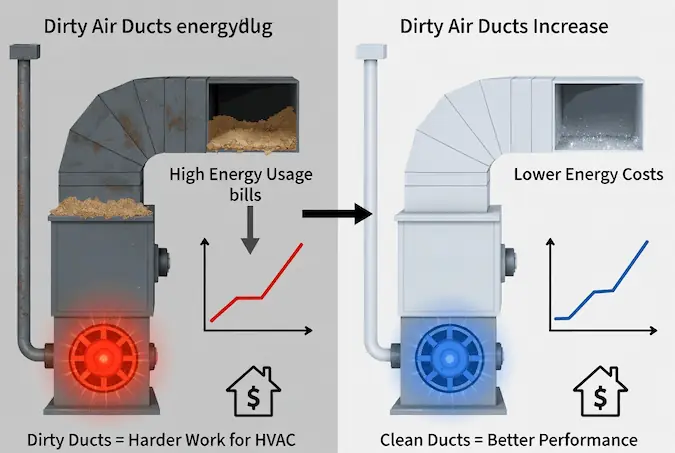
A clean duct system allows conditioned air to move freely from your HVAC unit to every room in your home with minimal resistance. When dust, pet dander, debris, and other contaminants accumulate on duct walls, that free flow is compromised.
The HVAC system responds to reduced airflow the same way a car engine responds to a clogged air filter — it compensates by working harder. This increased workload translates directly into higher energy consumption:
- The blower motor runs at higher capacity to push air through restricted ducts
- Heating and cooling cycles run longer to reach the thermostat set point
- Components experience greater wear, reducing overall system efficiency over time
According to the U.S. Department of Energy, heating and cooling accounts for nearly half of the average home's energy use. Any factor that reduces HVAC efficiency has an outsized impact on total utility costs.
Our Special Offers
Interested? Contact us at support@amazonadc.com, or (800) 606-3334
Air Duct Cleaning, Dryer Vent Cleaning & Sanitization
$399.00 $650.00
Restricted Airflow Forces Longer Run Times
When airflow through the duct system is restricted, your HVAC unit struggles to distribute conditioned air evenly throughout the home. Rooms at the far end of the duct run may receive inadequate airflow, while the thermostat — typically located in a central area — may not register the correct temperature quickly enough.
The result is longer heating and cooling cycles. Instead of reaching the set temperature and shutting off, the system continues running — consuming energy the entire time. Over the course of a month, these extended cycles add up to a measurable increase in your bill.
- HVAC system runs in longer, less efficient cycles
- Some rooms remain uncomfortable despite extended system operation
- Thermostat is satisfied slowly, keeping the system on longer than necessary
Short, efficient cycles are a sign of a well-functioning HVAC system. Long, labored cycles are a sign that something in the system — often the ductwork — is restricting performance.
Dirty Coils and Heat Exchanger Strain
Dust and debris circulating through a contaminated duct system do not stay confined to the ducts alone. Over time, particles reach the HVAC unit's evaporator coil, condenser coil, and heat exchanger — the components responsible for the actual heating and cooling process.
When these surfaces become coated with dust and debris, their ability to transfer heat is significantly reduced. The system must run longer and at higher intensity to compensate for the diminished heat exchange capacity:
- Insulated coils cannot absorb or release heat efficiently
- Compressor and motor work harder to compensate for reduced coil performance
- System draws more electricity per cycle with diminishing output
Coil cleaning is often performed as part of a comprehensive HVAC maintenance visit. When combined with professional duct cleaning, it restores the full heat transfer efficiency the system was designed to deliver.
How Debris Contributes to Duct Leaks and Energy Loss
Heavy debris accumulation inside ducts can contribute to physical deterioration of the duct system over time. Moisture trapped by organic debris can accelerate corrosion in metal ducts, while pressure buildup from restricted airflow can stress duct joints and seals.
Duct leaks compound the energy efficiency problem significantly. When conditioned air escapes through gaps, seams, or damaged sections before reaching its destination:
- A portion of every heating and cooling cycle is wasted into unconditioned spaces
- Living areas receive less conditioned air, requiring longer system run times
- Energy is consumed producing air that never reaches the rooms it was intended for
Professional inspection can identify both contamination and structural issues within the duct system, allowing for a comprehensive solution rather than treating symptoms in isolation.
Signs Your Ducts Are Hurting Your HVAC Efficiency
Several indicators suggest that dirty ductwork may be contributing to elevated energy costs in your home:
- Energy bills have increased gradually without a clear explanation
- The HVAC system runs almost continuously during moderate weather
- Rooms feel stuffy, unevenly heated, or fail to reach the thermostat setting
- Dust accumulates rapidly on surfaces throughout the home
- The HVAC system is more than 5 years old with no professional duct cleaning
- Air filters clog faster than the recommended replacement interval suggests
Any combination of these signs warrants a professional inspection of the duct system to assess the extent of contamination and determine the appropriate course of action.
How Professional Duct Cleaning Restores HVAC Efficiency
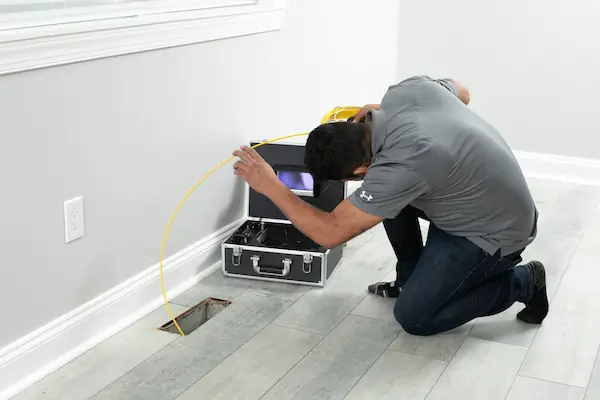
Professional air duct cleaning removes the accumulated debris that forces your HVAC system to work beyond its designed capacity. By restoring unobstructed airflow throughout the duct network, the system can operate as intended — efficiently and at lower energy consumption.
Professional services use equipment designed to address contamination throughout the entire system:
- High-powered vacuums that create negative pressure to capture debris without redistributing it
- Rotating brush systems to dislodge compacted buildup from duct walls
- Compressed air tools to reach bends, corners, and hard-to-access sections
- Inspection of duct integrity to identify leaks or damage that compound energy loss
After professional cleaning, the HVAC system benefits from reduced strain, shorter run cycles, and improved heat transfer — all of which contribute to lower monthly energy costs.
Maintenance Tips to Keep Energy Bills Low
Between professional cleanings, these practices help maintain duct efficiency and control energy costs:
- Replace Air Filters Regularly: Change filters every 1–3 months. A clogged filter is the single fastest way to restrict airflow and increase energy consumption.
- Use High-Efficiency Filters: MERV-rated filters capture smaller particles before they enter the duct system, slowing the rate of interior buildup.
- Schedule Annual HVAC Maintenance: Professional tune-ups include coil cleaning, refrigerant checks, and component inspection — all of which protect efficiency.
- Keep Vents Clear and Open: Blocking or closing vents increases system pressure and forces the blower to work harder, wasting energy.
- Seal Visible Duct Gaps: Use mastic sealant or metal foil tape on accessible duct joints to prevent conditioned air from escaping into unconditioned spaces.
- Professional Duct Cleaning Every 3–5 Years: Routine cleaning prevents the level of buildup that significantly impairs airflow and HVAC performance.
Amazon Air Duct Cleaning Service Area
Amazon Air Duct Cleaning proudly serves residential and commercial customers throughout Virginia, Maryland, and Washington, DC.
Virginia: Arlington, Alexandria, Fairfax, Springfield, Loudoun, Prince William, and more.
Maryland: Rockville, Silver Spring, Bethesda, Gaithersburg, College Park, and surrounding areas.
Washington DC: All DC neighborhoods including Capitol Hill, NW, NE, SE.
Conclusion
The connection between dirty air ducts and higher energy bills is direct and measurable. Restricted airflow, strained components, degraded heat transfer, and duct leaks all force your HVAC system to consume more energy to deliver the same level of comfort — and that excess consumption appears on your utility bill every month.
Professional air duct cleaning removes the root cause of this inefficiency, restoring your system's designed performance and helping to bring energy costs back under control. Combined with regular filter replacement and annual HVAC maintenance, clean ducts are one of the most effective steps a homeowner can take to reduce energy waste.
If your energy bills have been climbing without explanation, or if your HVAC system has not had a professional duct cleaning in the past 3–5 years, contact Amazon Air Duct Cleaning today to schedule an inspection and start saving on your monthly utility costs.
Frequently Asked Questions
Have questions about the details of air duct and dryer vent cleaning? Amazon Air Duct Cleaning has the answers. Keep reading or unlock special pricing online or call (800) 606-3334. We have several locations and serve multiple states across the U.S. Find specials in your area.
-
Can dirty air ducts really increase my energy bills?
Yes. When air ducts are clogged with dust and debris, airflow is restricted and your HVAC system must run longer and work harder to reach the desired temperature, consuming more energy in the process.
-
How much energy can dirty ducts waste?
According to the U.S. Department of Energy, duct-related inefficiencies — including blockages and leaks — can account for significant energy losses in a typical home's heating and cooling system.
-
How long does it take to see lower energy bills after duct cleaning?
Many homeowners notice improved HVAC efficiency and reduced energy consumption within the first full billing cycle after professional air duct cleaning, though results vary depending on system condition and usage.
-
Does changing the HVAC filter help reduce energy bills?
Yes. Replacing a clogged air filter restores airflow and reduces strain on the HVAC system. Filters should be replaced every 1–3 months depending on usage and household conditions.
-
Is professional duct cleaning worth the cost for energy savings?
For homes with significant duct contamination, professional cleaning can improve HVAC efficiency, reduce energy bills, and extend system lifespan — making it a cost-effective investment over time.